Dhikr: Remembering Allah Through an Ordinary Day
The authentic phrases of dhikr, the moments to place them from waking to bedtime, the right amount and how to keep the heart present, at any age and in any situation.
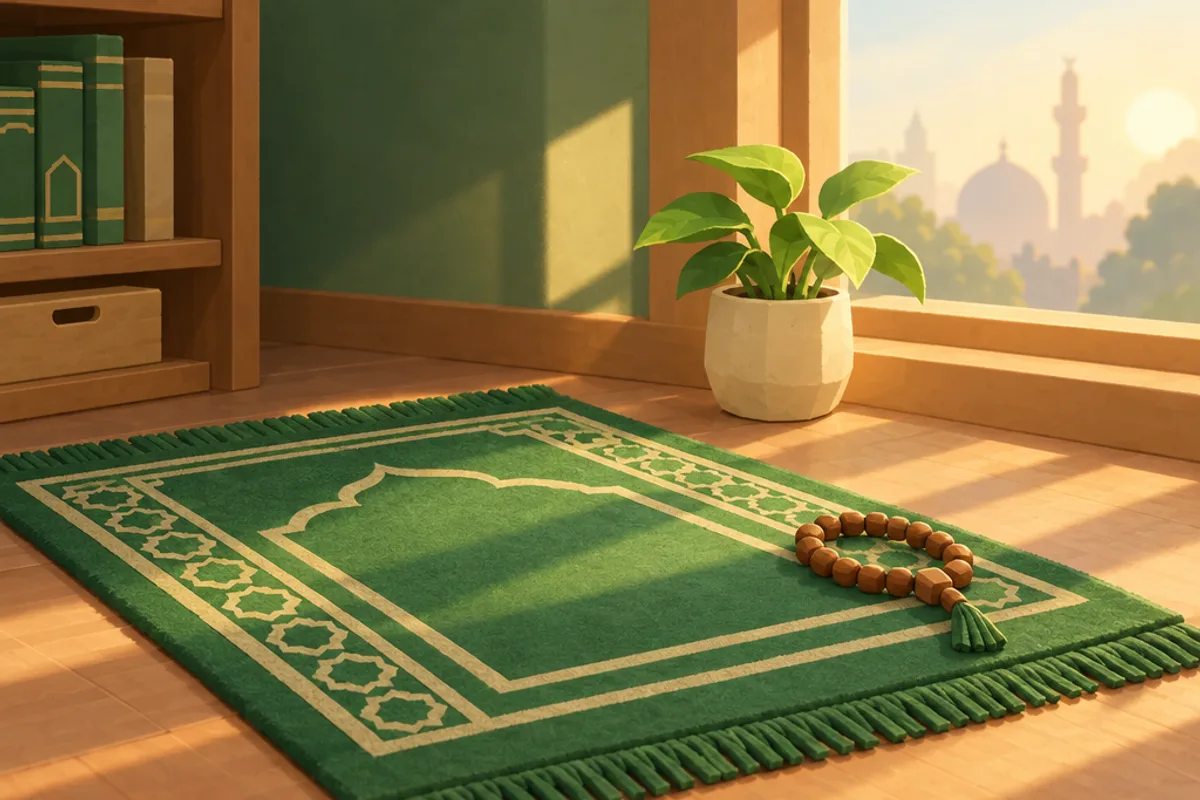
What is dhikr?
The word ذكر (dhikr) means both “to remember” and “to mention”. To do dhikr is to remember Allah and to name Him: with the tongue, by pronouncing words of praise, and with the heart, by thinking of Him. Prayer and the recitation of the Quran are themselves the highest forms of dhikr.
The Quran links this remembrance to inner peace:
ٱلَّذِينَ ءَامَنُوا۟ وَتَطْمَئِنُّ قُلُوبُهُم بِذِكْرِ ٱللَّهِ ۗ أَلَا بِذِكْرِ ٱللَّهِ تَطْمَئِنُّ ٱلْقُلُوبُ
ceux qui ont cru, et dont les cœurs se tranquillisent à l'évocation d'Allah». Certes, c'est par l'évocation d'Allah que les cœurs se tranquillisent.It also recalls a simple promise: “Remember Me, and I will remember you” (Surah al-Baqara, verse 152). The Prophet ﷺ, for his part, compared remembrance to life itself:
حَدَّثَنَا مُحَمَّدُ بْنُ الْعَلاَءِ، حَدَّثَنَا أَبُو أُسَامَةَ، عَنْ بُرَيْدِ بْنِ عَبْدِ اللَّهِ، عَنْ أَبِي بُرْدَةَ، عَنْ أَبِي مُوسَى ـ رضى الله عنه ـ قَالَ قَالَ النَّبِيُّ صلى الله عليه وسلم " مَثَلُ الَّذِي يَذْكُرُ رَبَّهُ وَالَّذِي لاَ يَذْكُرُ مَثَلُ الْحَىِّ وَالْمَيِّتِ ".
Narrated by Abu Musa al-Ash‘ari (may Allah be pleased with him)
The Prophet ﷺ said: “The one who remembers his Lord and the one who does not are like the living and the dead.”
Short, authentic phrases
There is no need for long prayers learned by heart to begin. Here are the simplest phrases, handed down by the Prophet ﷺ:
- سُبْحَانَ اللَّهِ subhan Allah: “Glory and purity be to Allah” (the tasbih);
- الْحَمْدُ لِلَّهِ al-hamdu lillah: “Praise be to Allah” (the tahmid);
- اللَّهُ أَكْبَرُ Allahu akbar: “Allah is the greatest” (the takbir);
- لَا إِلَهَ إِلَّا اللَّهُ la ilaha illa Allah: “None is worthy of worship except Allah” (the tahlil), which the Prophet ﷺ called “the best remembrance” (a hadith reported by at-Tirmidhi, graded hasan);
- astaghfirullah: “I seek Allah’s forgiveness”;
- la hawla wa la quwwata illa billah: “There is no might and no power except with Allah.”
Some words take only a few seconds and yet weigh very heavily:
حَدَّثَنَا زُهَيْرُ بْنُ حَرْبٍ، حَدَّثَنَا ابْنُ فُضَيْلٍ، عَنْ عُمَارَةَ، عَنْ أَبِي زُرْعَةَ، عَنْ أَبِي هُرَيْرَةَ، عَنِ النَّبِيِّ صلى الله عليه وسلم قَالَ " كَلِمَتَانِ خَفِيفَتَانِ عَلَى اللِّسَانِ، ثَقِيلَتَانِ فِي الْمِيزَانِ، حَبِيبَتَانِ إِلَى الرَّحْمَنِ، سُبْحَانَ اللَّهِ الْعَظِيمِ، سُبْحَانَ اللَّهِ وَبِحَمْدِهِ ".
Narrated by Abu Hurayra (may Allah be pleased with him)
The Prophet ﷺ said: “Two words that are light on the tongue, heavy on the scale, and beloved to the Most Merciful: subhan Allah al-‘azim, subhan Allah wa bihamdih.”
حَدَّثَنَا يَحْيَى بْنُ يَحْيَى، قَالَ قَرَأْتُ عَلَى مَالِكٍ عَنْ سُمَىٍّ، عَنْ أَبِي صَالِحٍ، عَنْ أَبِي هُرَيْرَةَ، أَنَّ رَسُولَ اللَّهِ صلى الله عليه وسلم قَالَ " مَنْ قَالَ لاَ إِلَهَ إِلاَّ اللَّهُ وَحْدَهُ لاَ شَرِيكَ لَهُ لَهُ الْمُلْكُ وَلَهُ الْحَمْدُ وَهُوَ عَلَى كُلِّ شَىْءٍ قَدِيرٌ . فِي يَوْمٍ مِائَةَ مَرَّةٍ . كَانَتْ لَهُ عَدْلَ عَشْرِ رِقَابٍ وَكُتِبَتْ لَهُ مِائَةُ حَسَنَةٍ وَمُحِيَتْ عَنْهُ مِائَةُ سَيِّئَةٍ وَكَانَتْ لَهُ حِرْزًا مِنَ الشَّيْطَانِ يَوْمَهُ ذَلِكَ حَتَّى يُمْسِيَ وَلَمْ يَأْتِ أَحَدٌ أَفْضَلَ مِمَّا جَاءَ بِهِ إِلاَّ أَحَدٌ عَمِلَ أَكْثَرَ مِنْ ذَلِكَ . وَمَنْ قَالَ سُبْحَانَ اللَّهِ وَبِحَمْدِهِ فِي يَوْمٍ مِائَةَ مَرَّةٍ حُطَّتْ خَطَايَاهُ وَلَوْ كَانَتْ مِثْلَ زَبَدِ الْبَحْرِ " .
Narrated by Abu Hurayra (may Allah be pleased with him)
The Messenger of Allah ﷺ said: “Whoever says one hundred times in the day: ‘None is worthy of worship except Allah, alone, without partner; to Him belongs the dominion, to Him belongs all praise, and He is capable of all things,’ it is for him equal to freeing ten slaves; one hundred good deeds are recorded for him, one hundred bad deeds are erased from him, and it is a protection for him from the Devil that day until evening. No one brings anything better than what he brings, except someone who has done more. And whoever says one hundred times in the day: ‘Glory and purity be to Allah, and praise be to Him,’ his sins are erased, even if they were like the foam of the sea.”
The moments of an ordinary day
The Quran asks us to remember Allah “abundantly”, and to glorify Him at the beginning and the end of the day:
يَٰٓأَيُّهَا ٱلَّذِينَ ءَامَنُوا۟ ٱذْكُرُوا۟ ٱللَّهَ ذِكْرًۭا كَثِيرًۭا ﴿41﴾ وَسَبِّحُوهُ بُكْرَةًۭ وَأَصِيلًا ﴿42﴾
(41) O vous qui croyez! Evoquez Allah d'une façon abondante, (42) et glorifiez-Le à la pointe et au déclin du jour.In concrete terms, an ordinary day already offers many appointments:
Steps
On waking: thank Allah for giving us back life, with the supplications for waking up.
When leaving the house: bismillah, tawakkaltu ‘ala Allah, as explained in the article on tawakkul.
After each obligatory prayer: astaghfirullah three times, then subhan Allah 33 times, al-hamdu lillah 33 times and Allahu akbar 33 times, a practice reported by al-Bukhari and Muslim. One can add the supplication taught to Mu‘adh: “O Allah, help me to remember You, to thank You and to worship You well” (after the prayer).
Morning and evening: the morning and evening remembrances, presented in our article on morning and evening supplications.
In “empty” moments: commutes, waiting in line, the kitchen, walking… a subhan Allah wa bihamdih repeated under your breath.
Before sleeping: the glorification taught to Fatima and Ali (see below) and the bedtime supplications.
The bedtime hadith has a lovely story. Fatima (may Allah be pleased with her) was suffering from the strain of the grain mill and came to ask her father for a servant:
حَدَّثَنَا بَدَلُ بْنُ الْمُحَبَّرِ، أَخْبَرَنَا شُعْبَةُ، قَالَ أَخْبَرَنِي الْحَكَمُ، قَالَ سَمِعْتُ ابْنَ أَبِي لَيْلَى، حَدَّثَنَا عَلِيٌّ، أَنَّ فَاطِمَةَ ـ عَلَيْهَا السَّلاَمُ ـ اشْتَكَتْ مَا تَلْقَى مِنَ الرَّحَى مِمَّا تَطْحَنُ، فَبَلَغَهَا أَنَّ رَسُولَ اللَّهِ صلى الله عليه وسلم أُتِيَ بِسَبْىٍ، فَأَتَتْهُ تَسْأَلُهُ خَادِمًا فَلَمْ تُوَافِقْهُ، فَذَكَرَتْ لِعَائِشَةَ، فَجَاءَ النَّبِيُّ صلى الله عليه وسلم فَذَكَرَتْ ذَلِكَ عَائِشَةُ لَهُ، فَأَتَانَا وَقَدْ دَخَلْنَا مَضَاجِعَنَا، فَذَهَبْنَا لِنَقُومَ فَقَالَ " عَلَى مَكَانِكُمَا " حَتَّى وَجَدْتُ بَرْدَ قَدَمَيْهِ عَلَى صَدْرِي فَقَالَ " أَلاَ أَدُلُّكُمَا عَلَى خَيْرٍ مِمَّا سَأَلْتُمَاهُ، إِذَا أَخَذْتُمَا مَضَاجِعَكُمَا فَكَبِّرَا اللَّهَ أَرْبَعًا وَثَلاَثِينَ، وَاحْمَدَا ثَلاَثًا وَثَلاَثِينَ، وَسَبِّحَا ثَلاَثًا وَثَلاَثِينَ، فَإِنَّ ذَلِكَ خَيْرٌ لَكُمَا مِمَّا سَأَلْتُمَاهُ ".
Narrated by Ali ibn Abi Talib (may Allah be pleased with him)
The Prophet ﷺ came to us when we were lying in bed and said: “Shall I not tell you of something better than what you asked me for? When you go to bed, say Allahu akbar thirty-four times, al-hamdu lillah thirty-three times and subhan Allah thirty-three times: that is better for you than what you asked.”
How many times? Quantity and regularity
Some remembrances have a fixed number set by the Sunnah (3, 33, 100): we keep to it as far as possible. The others are free: we say as many as we wish, without imposing numbers on ourselves that tire us and end up discouraging us. Five minutes every day is better than an hour once a month.
A Companion, overwhelmed by the number of practices, asked for a simple piece of advice. The answer was very gentle:
حَدَّثَنَا أَبُو كُرَيْبٍ، حَدَّثَنَا زَيْدُ بْنُ حُبَابٍ، عَنْ مُعَاوِيَةَ بْنِ صَالِحٍ، عَنْ عَمْرِو بْنِ قَيْسٍ، عَنْ عَبْدِ اللَّهِ بْنِ بُسْرٍ، رضى الله عنه أَنَّ رَجُلاً، قَالَ يَا رَسُولَ اللَّهِ إِنَّ شَرَائِعَ الإِسْلاَمِ قَدْ كَثُرَتْ عَلَىَّ فَأَخْبِرْنِي بِشَيْءٍ أَتَشَبَّثُ بِهِ . قَالَ " لاَ يَزَالُ لِسَانُكَ رَطْبًا مِنْ ذِكْرِ اللَّهِ " . قَالَ أَبُو عِيسَى هَذَا حَدِيثٌ حَسَنٌ غَرِيبٌ مِنْ هَذَا الْوَجْهِ .
Narrated by Abdullah ibn Busr (may Allah be pleased with him)
A man said: “O Messenger of Allah, the prescriptions of Islam have become many for me; tell me one thing I can hold fast to.” He replied: “Let your tongue never cease to be moist with the remembrance of Allah.”
To count, the fingers are enough; Hisn al-Muslim even devotes a chapter to how the Prophet ﷺ glorified Allah.
Keeping the heart present
Ideal dhikr unites the tongue and the heart. The Quran invites us to remember our Lord “within ourselves”, with humility, in a low voice, morning and evening (Surah al-A‘raf, verse 205). A few pointers help us stay attentive:
- understand what we say: knowing the meaning of each phrase changes everything;
- slow down: ten calm subhan Allah are better than a hundred recited at full speed;
- vary: moving from one phrase to another wakes up attention;
- connect dhikr to what we experience: an al-hamdu lillah before a good meal, a subhan Allah before a beautiful sky.
And if the mind wanders? We carry on. The dhikr of the tongue remains a good deed, and little by little it opens the door of the heart. Allah promises to be near the one who remembers Him:
حَدَّثَنَا قُتَيْبَةُ بْنُ سَعِيدٍ، وَزُهَيْرُ بْنُ حَرْبٍ، - وَاللَّفْظُ لِقُتَيْبَةَ - قَالاَ حَدَّثَنَا جَرِيرٌ، عَنِ الأَعْمَشِ، عَنْ أَبِي صَالِحٍ، عَنْ أَبِي هُرَيْرَةَ، قَالَ قَالَ رَسُولُ اللَّهِ صلى الله عليه وسلم " يَقُولُ اللَّهُ عَزَّ وَجَلَّ أَنَا عِنْدَ ظَنِّ عَبْدِي بِي وَأَنَا مَعَهُ حِينَ يَذْكُرُنِي إِنْ ذَكَرَنِي فِي نَفْسِهِ ذَكَرْتُهُ فِي نَفْسِي وَإِنْ ذَكَرَنِي فِي مَلإٍ ذَكَرْتُهُ فِي مَلإٍ هُمْ خَيْرٌ مِنْهُمْ وَإِنْ تَقَرَّبَ مِنِّي شِبْرًا تَقَرَّبْتُ إِلَيْهِ ذِرَاعًا وَإِنْ تَقَرَّبَ إِلَىَّ ذِرَاعًا تَقَرَّبْتُ مِنْهُ بَاعًا وَإِنْ أَتَانِي يَمْشِي أَتَيْتُهُ هَرْوَلَةً " .
Narrated by Abu Hurayra (may Allah be pleased with him)
The Messenger of Allah ﷺ said (excerpt): “Allah, Mighty and Majestic, says: ‘I am as My servant thinks of Me, and I am with him when he remembers Me. If he remembers Me within himself, I remember him within Myself; and if he remembers Me in an assembly, I remember him in an assembly better than his.’”
An act of worship within everyone’s reach
Dhikr is probably the most accessible act of worship there is. The Quran describes the believers who remember Allah in every position:
ٱلَّذِينَ يَذْكُرُونَ ٱللَّهَ قِيَٰمًۭا وَقُعُودًۭا وَعَلَىٰ جُنُوبِهِمْ وَيَتَفَكَّرُونَ فِى خَلْقِ ٱلسَّمَٰوَٰتِ وَٱلْأَرْضِ رَبَّنَا مَا خَلَقْتَ هَٰذَا بَٰطِلًۭا سُبْحَٰنَكَ فَقِنَا عَذَابَ ٱلنَّارِ
qui, debout, assis, couchés sur leurs côtés, invoquent Allah et méditent sur la création des cieux et de la terre (disant): «Notre Seigneur! Tu n'as pas créé cela en vain. Gloire à Toi! Garde-nous du châtiment du Feu.Standing, sitting or lying on their sides: an elderly person in an armchair, a patient in hospital, a person with a disability can all practice dhikr fully. It requires neither ablution, nor a place, nor a particular direction; scholars agree that it remains permitted for a woman during her period.
A few ideas to make the practice easier:
- choose two or three short phrases and stick to them;
- listen to recorded remembrances when eyesight or memory grow tired;
- remember Allah as a family, for example the 33 glorifications at bedtime said together with the children;
- stick a small reminder next to the bed or on the refrigerator.
To go further
- The merit of remembering Allah in Hisn al-Muslim.
- The book of remembrances (adhkar) in Riyad as-Salihin.
- Starting with the essentials: Morning and evening supplications.
- Returning to Allah after a mistake: Repentance (tawba).
Questions fréquentes
What is dhikr in Islam?
It is the remembrance of Allah: remembering Him with the heart and mentioning Him with the tongue, with words such as subhan Allah or al-hamdu lillah. Prayer and the recitation of the Quran are its highest forms.
What are the best phrases of dhikr?
“La ilaha illa Allah” is called the best remembrance in a hadith reported by at-Tirmidhi. Subhan Allah, al-hamdu lillah, Allahu akbar and “subhan Allah wa bihamdih, subhan Allah al-‘azim” are also authentic phrases, short and very meritorious.
Is ablution needed to do dhikr?
No. Dhikr can be done without ablution, at any time and in any position, standing, sitting or lying down. Scholars agree that it remains permitted for a woman during her period.
How many times should one say subhan Allah?
After the prayer, the Sunnah teaches 33 times subhan Allah, 33 times al-hamdu lillah and 33 times Allahu akbar; before sleeping, 33, 33 and 34. Outside these counted remembrances there is no imposed number: regularity matters more than quantity.
Can prayer beads be used to count dhikr?
Many scholars accept it, others prefer counting on the fingers and discourage beads. Both practices exist among Muslims; what matters is not to make it a subject of dispute.
Does my dhikr count if I am distracted?
Yes, the dhikr of the tongue remains a good deed, even when the mind wanders. We try, little by little, to understand the meaning of the phrases and to slow down, so that the heart joins the tongue.
Mots arabes de cet article
- Dhikr ذكر
- The remembrance of Allah: remembering Him with the heart and mentioning Him with the tongue.
- Adhkar أذكار
- Plural of dhikr: the phrases of remembrance handed down by the Prophet ﷺ, for example those of the morning and evening.
- Tasbih تسبيح
- Saying “subhan Allah”: proclaiming that Allah is free of every defect.
- Tahmid تحميد
- Saying “al-hamdu lillah”: praising Allah and thanking Him.
- Takbir تكبير
- Saying “Allahu akbar”: proclaiming that Allah is the greatest.
- Tahlil تهليل
- Saying “la ilaha illa Allah”: bearing witness that none is worthy of worship except Allah.
- Subha سبحة
- String of beads used by some to count their phrases of dhikr.
Sources et références
Chaque référence a été contrôlée automatiquement : existence du verset ou du hadith, numérotation sunnah.com, degré d’authenticité selon les savants.
- Coran 13:28Vérifiéquran.com
- Coran 2:152Vérifié« Souvenez-vous de Moi, Je Me souviendrai de vous »quran.com
- Coran 33:41-42Vérifiéquran.com
- Coran 7:205Vérifiéévoquer son Seigneur en soi-même, à mi-voixquran.com
- Coran 3:191Vérifiéquran.com
- Sahîh al-Bukhârî n° 6407Sahîh (authentique) · al-Bukhârî (recueil authentique par consensus)VérifiéVoir sur sunnah.com
- Jâmi‘ at-Tirmidhî n° 3383Hasan (bon) · Ahmad Muhammad ShâkirVérifiéla meilleure évocation : lâ ilâha illâ AllâhVoir sur sunnah.com
- Sahîh al-Bukhârî n° 6406Sahîh (authentique) · al-Bukhârî (recueil authentique par consensus)VérifiéVoir sur sunnah.com
- Sahîh Muslim n° 2691aSahîh (authentique) · Muslim (recueil authentique par consensus)VérifiéVoir sur sunnah.com
- Sunan Abî Dâwûd n° 1522Sahîh (authentique) · al-AlbânîVérifiéinvocation enseignée à Mu‘âdh après chaque prièreVoir sur sunnah.com
- Sahîh al-Bukhârî n° 3113Sahîh (authentique) · al-Bukhârî et Muslim (muttafaq ‘alayh, Muslim n° 2727a)VérifiéVoir sur sunnah.com
- Jâmi‘ at-Tirmidhî n° 3375Hasan (bon) · Bashshâr ‘Awwâd Ma‘rûfVérifiéVoir sur sunnah.com
- Sahîh Muslim n° 2675aSahîh (authentique) · Muslim (recueil authentique par consensus)Vérifiéhadith qudsî, extraitVoir sur sunnah.com
Dans l’application
Cet article est une synthèse pédagogique : il résume des sources vérifiées et ne constitue pas une fatwa. Les détails de pratique peuvent varier selon les écoles. Pour une situation personnelle, consultez une personne qualifiée. Signaler une erreur
Articles liés

Morning and evening supplications: a ten-minute routine
A selection of authentic morning and evening supplications, their meaning, the best time to say them and a simple method to turn them into a lasting habit.

Tawakkul: Trusting in Allah While Taking the Means
What tawakkul means, the lessons of the camel and the birds, how it eases everyday worry, and why our app is called Tawakoul.

Repentance (tawba): Starting Over Without Despairing of Mercy
The conditions of sincere repentance, Allah’s mercy that rejoices at the servant’s return, what to do after a relapse, and how to perform the prayer of repentance.