The Two Eids: ‘Īd al-Fitr and ‘Īd al-Adhā, What to Do in Practice
Eid prayer, zakāt al-fitr, sacrifice, takbīr and children’s joy: what the sunna teaches for living Islam’s two festivals simply and with family.

Two festivals, two acts of worship completed
Islam has two major festivals each year. ‘Īd al-Fitr, the festival of breaking the fast, falls on 1 Shawwāl, the day after Ramadan. ‘Īd al-Adhā, the festival of sacrifice, falls on 10 Dhū al-Hijja, during the pilgrimage. Each one crowns an act of worship: the month of fasting for the first, the first ten days of Dhū al-Hijja and the Hajj for the second.
The word عِيد (‘īd) evokes return: it is the day that comes back every year, with its joy and its rites. This joy is part of the religion, as shown by a scene told by ‘Ā’isha (may Allah be pleased with her):
حَدَّثَنَا عُبَيْدُ بْنُ إِسْمَاعِيلَ، قَالَ حَدَّثَنَا أَبُو أُسَامَةَ، عَنْ هِشَامٍ، عَنْ أَبِيهِ، عَنْ عَائِشَةَ ـ رضى الله عنها ـ قَالَتْ دَخَلَ أَبُو بَكْرٍ وَعِنْدِي جَارِيَتَانِ مِنْ جَوَارِي الأَنْصَارِ تُغَنِّيَانِ بِمَا تَقَاوَلَتِ الأَنْصَارُ يَوْمَ بُعَاثَ ـ قَالَتْ وَلَيْسَتَا بِمُغَنِّيَتَيْنِ ـ فَقَالَ أَبُو بَكْرٍ أَمَزَامِيرُ الشَّيْطَانِ فِي بَيْتِ رَسُولِ اللَّهِ صلى الله عليه وسلم وَذَلِكَ فِي يَوْمِ عِيدٍ. فَقَالَ رَسُولُ اللَّهِ صلى الله عليه وسلم " يَا أَبَا بَكْرٍ إِنَّ لِكُلِّ قَوْمٍ عِيدًا، وَهَذَا عِيدُنَا ".
Narrated by ‘Ā’isha (may Allah be pleased with her)
Abū Bakr came in while two Ansār girls were singing beside me what the Ansār had said to one another on the day of Bu‘āth; they were not singers. Abū Bakr said: “Instruments of the Devil in the house of the Messenger of Allah ﷺ!” It was a day of festival. The Messenger of Allah ﷺ then said: “O Abū Bakr, every people has its festival, and this is our festival.”
The eve and the morning: the gestures of the sunna
The Quran links the end of Ramadan with proclaiming Allah’s greatness:
شَهْرُ رَمَضَانَ ٱلَّذِىٓ أُنزِلَ فِيهِ ٱلْقُرْءَانُ هُدًۭى لِّلنَّاسِ وَبَيِّنَٰتٍۢ مِّنَ ٱلْهُدَىٰ وَٱلْفُرْقَانِ ۚ فَمَن شَهِدَ مِنكُمُ ٱلشَّهْرَ فَلْيَصُمْهُ ۖ وَمَن كَانَ مَرِيضًا أَوْ عَلَىٰ سَفَرٍۢ فَعِدَّةٌۭ مِّنْ أَيَّامٍ أُخَرَ ۗ يُرِيدُ ٱللَّهُ بِكُمُ ٱلْيُسْرَ وَلَا يُرِيدُ بِكُمُ ٱلْعُسْرَ وَلِتُكْمِلُوا۟ ٱلْعِدَّةَ وَلِتُكَبِّرُوا۟ ٱللَّهَ عَلَىٰ مَا هَدَىٰكُمْ وَلَعَلَّكُمْ تَشْكُرُونَ
(Ces jours sont) le mois de Ramadân au cours duquel le Coran a été descendu comme guide pour les gens, et preuves claires de la bonne direction et du discernement. Donc, quiconque d'entre vous est présent en ce mois, qu'il jeûne! Et quiconque est malade ou en voyage, alors qu'il jeûne un nombre égal d'autres jours. - Allah veut pour vous la facilité, Il ne veut pas la difficulté pour vous, afin que vous en complétiez le nombre et que vous proclamiez la grandeur d'Allah pour vous avoir guidés, et afin que vous soyez reconnaissants!This is the origin of the takbīr repeated at home, on the way and at the mosque: اللَّهُ أَكْبَرُ اللَّهُ أَكْبَرُ لَا إِلَهَ إِلَّا اللَّهُ وَاللَّهُ أَكْبَرُ اللَّهُ أَكْبَرُ وَلِلَّهِ الْحَمْدُ (Allāhu akbar, Allāhu akbar, lā ilāha illā Allāh, wa Allāhu akbar, Allāhu akbar, wa lillāhi-l-hamd), “Allah is the greatest, there is no deity but Allah, and to Allah belongs all praise.” It is said from the evening before until the prayer for Eid al-Fitr, and until the end of the days of tashrīq (13 Dhū al-Hijja) for Eid al-Adhā, with differing opinions on the exact times.
On the morning of the festival, several gestures are recommended:
- performing the full ritual bath (ghusl), putting on your best clothes and, for men, wearing perfume;
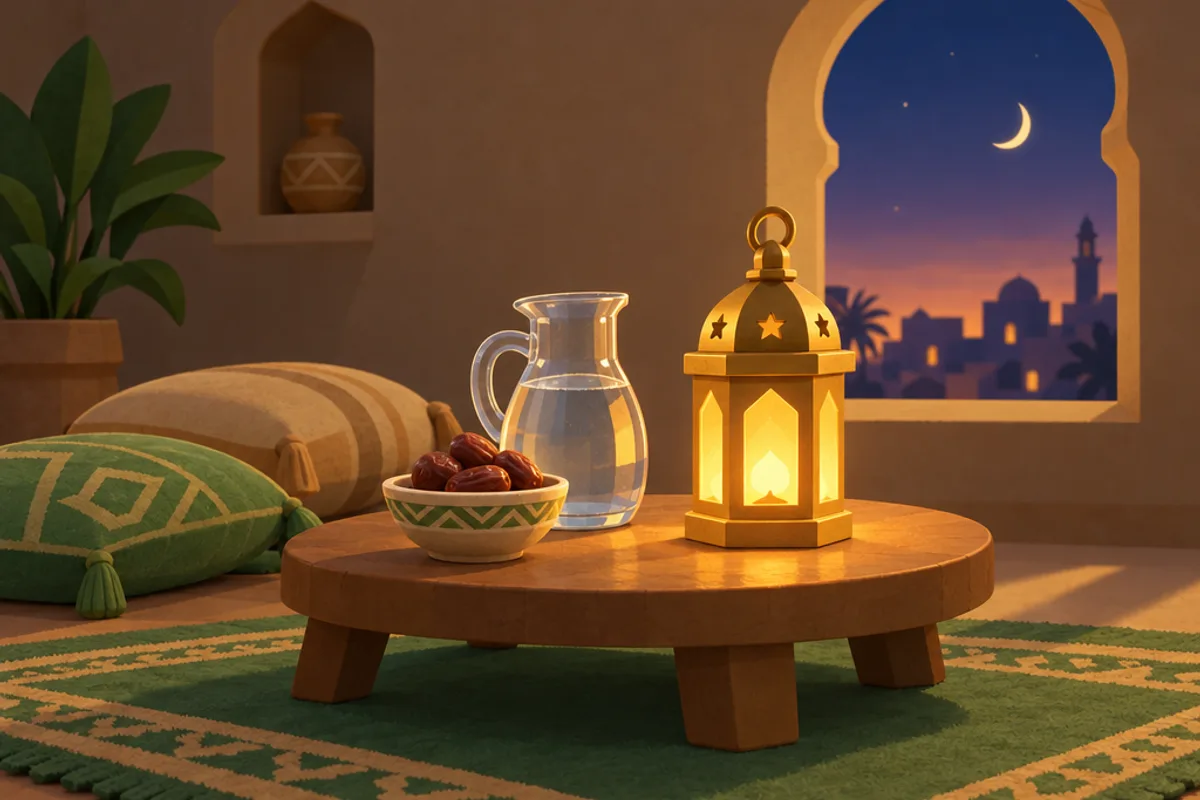
- for Eid al-Fitr, eating a few dates, an odd number, before going out;
- for Eid al-Adhā, waiting rather until the end of the prayer to eat, as many scholars recommend;
- going to the prayer by one road and coming back by another, as the Prophet ﷺ did according to al-Bukhārī;
- bringing the whole family: al-Bukhārī and Muslim report that even women in their menstrual period came to witness the good and the supplications, staying apart from the prayer area.
حَدَّثَنَا مُحَمَّدُ بْنُ عَبْدِ الرَّحِيمِ، حَدَّثَنَا سَعِيدُ بْنُ سُلَيْمَانَ، قَالَ حَدَّثَنَا هُشَيْمٌ، قَالَ أَخْبَرَنَا عُبَيْدُ اللَّهِ بْنُ أَبِي بَكْرِ بْنِ أَنَسٍ، عَنْ أَنَسٍ، قَالَ كَانَ رَسُولُ اللَّهِ صلى الله عليه وسلم لاَ يَغْدُو يَوْمَ الْفِطْرِ حَتَّى يَأْكُلَ تَمَرَاتٍ. وَقَالَ مُرَجَّى بْنُ رَجَاءٍ حَدَّثَنِي عُبَيْدُ اللَّهِ قَالَ حَدَّثَنِي أَنَسٌ عَنِ النَّبِيِّ صلى الله عليه وسلم وَيَأْكُلُهُنَّ وِتْرًا.
Narrated by Anas ibn Mālik (may Allah be pleased with him)
The Messenger of Allah ﷺ would not set out in the morning on the day of the fast-breaking (al-Fitr) before eating a few dates. According to another chain, Anas specifies that he ate them in an odd number.
The Eid prayer, step by step
The prayer is performed in a group, in the morning, often in the open air or in a large hall. It is short and accessible even to those just starting out.
Steps
Arrive after sunrise: the time begins about a quarter of an hour after sunrise and ends before the zenith.
There is no call to prayer (adhān) and no iqāma: the imam begins directly.
Form in your heart the intention for the Eid prayer, then follow the imam for two units (rak‘a).
At the beginning of each unit, the imam says additional takbīrs: say them quietly while following him.
Listen to the sermon (khutba), which comes after the prayer, unlike on Friday.
Wish one another a happy festival, then go home by another road.
To wish one another a happy festival, many say تَقَبَّلَ اللَّهُ مِنَّا وَمِنْكُمْ (taqabbala Allāhu minnā wa minkum), “may Allah accept from us and from you,” or simply “‘Īd mubārak,” “blessed festival.”
Zakāt al-fitr: so that no one goes hungry that day
Before the Eid al-Fitr prayer, each family pays a small obligatory charity, the zakāt al-fitr.
حَدَّثَنَا يَحْيَى بْنُ مُحَمَّدِ بْنِ السَّكَنِ، حَدَّثَنَا مُحَمَّدُ بْنُ جَهْضَمٍ، حَدَّثَنَا إِسْمَاعِيلُ بْنُ جَعْفَرٍ، عَنْ عُمَرَ بْنِ نَافِعٍ، عَنْ أَبِيهِ، عَنِ ابْنِ عُمَرَ ـ رضى الله عنهما ـ قَالَ فَرَضَ رَسُولُ اللَّهِ صلى الله عليه وسلم زَكَاةَ الْفِطْرِ صَاعًا مِنْ تَمْرٍ، أَوْ صَاعًا مِنْ شَعِيرٍ عَلَى الْعَبْدِ وَالْحُرِّ، وَالذَّكَرِ وَالأُنْثَى، وَالصَّغِيرِ وَالْكَبِيرِ مِنَ الْمُسْلِمِينَ، وَأَمَرَ بِهَا أَنْ تُؤَدَّى قَبْلَ خُرُوجِ النَّاسِ إِلَى الصَّلاَةِ.
Narrated by ‘Abdullāh ibn ‘Umar (may Allah be pleased with him and his father)
The Messenger of Allah ﷺ prescribed zakāt al-fitr: one sā‘ of dates or one sā‘ of barley, for the slave and the free person, for the man and the woman, for the young and the old among the Muslims. And he ordered that it be paid before people go out for the prayer.
Concretely:
- it is due for each member of the household, children included, and the head of the family pays it for those in his care;
- the sā‘ is a measure of volume, about 2.5 to 3 kg of a staple food (dates, wheat, rice, semolina…);
- it is given before the prayer, or one or two days before, as the Companions did;
- it goes to people in need, directly or through the mosque and associations.
Some commentators have seen in these verses an allusion to zakāt al-fitr followed by the Eid prayer:
قَدْ أَفْلَحَ مَن تَزَكَّىٰ ﴿14﴾ وَذَكَرَ ٱسْمَ رَبِّهِۦ فَصَلَّىٰ ﴿15﴾
(14) Réussit, certes, celui qui se purifie, (15) et se rappelle le nom de son Seigneur, puis célèbre la Salât.‘Īd al-Adhā and the sacrifice
‘Īd al-Adhā recalls the submission of Ibrāhīm (peace be upon him), ready to sacrifice his son before Allah redeemed him with an offering. What counts is not the meat, but piety:
لَن يَنَالَ ٱللَّهَ لُحُومُهَا وَلَا دِمَآؤُهَا وَلَٰكِن يَنَالُهُ ٱلتَّقْوَىٰ مِنكُمْ ۚ كَذَٰلِكَ سَخَّرَهَا لَكُمْ لِتُكَبِّرُوا۟ ٱللَّهَ عَلَىٰ مَا هَدَىٰكُمْ ۗ وَبَشِّرِ ٱلْمُحْسِنِينَ
Ni leurs chairs ni leurs sangs n'atteindront Allah, mais ce qui L'atteint de votre part c'est la piété. Ainsi vous les a-t-Il assujettis afin que vous proclamiez la grandeur d'Allah, pour vous avoir mis sur le droit chemin. Et annonce la bonne nouvelle aux bienfaisants.A few practical landmarks:
- the sacrifice (udhiya) is a sheep or a goat for a household, or a share of a cow or a camel shared by up to seven;
- the animal must be of the required age and free of visible defects (sick, lame, one-eyed, very thin);
- it is slaughtered after the Eid prayer and during the following days;
- you eat from it, give some away and give some to the needy (22:36); dividing it into three thirds is a recommendation, not an obligation.
In France, slaughter must take place in an approved slaughterhouse: many families go through their mosque or an association, or delegate the sacrifice in another country for the benefit of poor families.
According to a hadith reported by Muslim, whoever intends to sacrifice avoids cutting his hair and nails from the beginning of Dhū al-Hijja. And those who are not on pilgrimage are invited to fast on the day of ‘Arafa, the eve of the Eid:
وَحَدَّثَنَا يَحْيَى بْنُ يَحْيَى التَّمِيمِيُّ، وَقُتَيْبَةُ بْنُ سَعِيدٍ، جَمِيعًا عَنْ حَمَّادٍ، - قَالَ يَحْيَى أَخْبَرَنَا حَمَّادُ بْنُ زَيْدٍ، - عَنْ غَيْلاَنَ، عَنْ عَبْدِ اللَّهِ بْنِ مَعْبَدٍ الزِّمَّانِيِّ، عَنْ أَبِي قَتَادَةَ، رَجُلٌ أَتَى النَّبِيَّ صلى الله عليه وسلم فَقَالَ كَيْفَ تَصُومُ فَغَضِبَ رَسُولُ اللَّهِ صلى الله عليه وسلم فَلَمَّا رَأَى عُمَرُ - رضى الله عنه - غَضَبَهُ قَالَ رَضِينَا بِاللَّهِ رَبًّا وَبِالإِسْلاَمِ دِينًا وَبِمُحَمَّدٍ نَبِيًّا نَعُوذُ بِاللَّهِ مِنْ غَضَبِ اللَّهِ وَغَضَبِ رَسُولِهِ . فَجَعَلَ عُمَرُ - رضى الله عنه - يُرَدِّدُ هَذَا الْكَلاَمَ حَتَّى سَكَنَ غَضَبُهُ فَقَالَ عُمَرُ يَا رَسُولَ اللَّهِ كَيْفَ بِمَنْ يَصُومُ الدَّهْرَ كُلَّهُ قَالَ " لاَ صَامَ وَلاَ أَفْطَرَ - أَوْ قَالَ - لَمْ يَصُمْ وَلَمْ يُفْطِرْ " . قَالَ كَيْفَ مَنْ يَصُومُ يَوْمَيْنِ وَيُفْطِرُ يَوْمًا قَالَ " وَيُطِيقُ ذَلِكَ أَحَدٌ " . قَالَ كَيْفَ مَنْ يَصُومُ يَوْمًا وَيُفْطِرُ يَوْمًا قَالَ " ذَاكَ صَوْمُ دَاوُدَ عَلَيْهِ السَّلاَمُ " . قَالَ كَيْفَ مَنْ يَصُومُ يَوْمًا وَيُفْطِرُ يَوْمَيْنِ قَالَ " وَدِدْتُ أَنِّي طُوِّقْتُ ذَلِكَ " . ثُمَّ قَالَ رَسُولُ اللَّهِ صلى الله عليه وسلم " ثَلاَثٌ مِنْ كُلِّ شَهْرٍ وَرَمَضَانُ إِلَى رَمَضَانَ فَهَذَا صِيَامُ الدَّهْرِ كُلِّهِ صِيَامُ يَوْمِ عَرَفَةَ أَحْتَسِبُ عَلَى اللَّهِ أَنْ يُكَفِّرَ السَّنَةَ الَّتِي قَبْلَهُ وَالسَّنَةَ الَّتِي بَعْدَهُ وَصِيَامُ يَوْمِ عَاشُورَاءَ أَحْتَسِبُ عَلَى اللَّهِ أَنْ يُكَفِّرَ السَّنَةَ الَّتِي قَبْلَهُ " .
Narrated by Abū Qatāda (may Allah be pleased with him)
Asked about various fasts, the Messenger of Allah ﷺ said, among other things: “As for fasting on the day of ‘Arafa, I hope from Allah that it expiates the year before it and the year after it; and fasting on the day of ‘Āshūrā’, I hope from Allah that it expiates the year before it.”
On the days of the festival themselves, however, one does not fast: the Prophet ﷺ forbade it, according to al-Bukhārī and Muslim.
With children: a happy memory
Eid is often a child’s first religious memory. Al-Bukhārī and Muslim report that on a festival day, Abyssinians were playing with their shields and spears, and the Prophet ﷺ let ‘Ā’isha watch them until she grew tired of it.
A few simple ideas:
- prepare the new clothes the evening before and decorate the house together;
- entrust the children with handing over the zakāt al-fitr, so that they think of others before celebrating;
- give a small gift, the ‘īdiyya of many families;
- visit grandparents, neighbors, someone who is alone or sick;
- smile, greet, share a meal.
Think of those for whom Eid is difficult: people in mourning, the sick, the isolated, new Muslims far from their families. A call or an invitation, and the festival becomes complete.
Going further
- The guide Fasting Ramadan, which prepares for Eid al-Fitr.
- Understanding the obligatory charity: Zakāt, understanding and calculating it.
- The story of Ibrāhīm (peace be upon him) and his son.
- The prayer times of your city, to plan the time of the Eid prayer.
Questions fréquentes
When do Eid al-Fitr and Eid al-Adhā take place?
Eid al-Fitr falls on 1 Shawwāl, right after Ramadan, and Eid al-Adhā on 10 Dhū al-Hijja. Since the Muslim calendar is lunar, both festivals move forward by about eleven days each year. The methods for fixing the date (moon sighting or calculation) differ among authorities: follow that of your community.
How much should I give for zakāt al-fitr?
The hadith sets one sā‘ per person, about 2.5 to 3 kg of a staple food. The Hanafis accept its value in money, and many mosques in France announce an indicative amount each year. It is paid before the Eid prayer, or one to two days before.
Is the Eid prayer obligatory?
The schools differ: obligatory for the Hanafis, a strongly recommended sunna for the Malikis and Shafi‘is, a collective obligation for the Hanbalis. All strongly encourage everyone to attend, including women and children.
Can you perform the Eid sacrifice at home in France?
No: in France, slaughter must take place in an approved slaughterhouse. Many families go through their mosque or an association, or delegate the sacrifice in another country. For religious questions related to your case, consult an imam.
What should I do if I missed the Eid prayer?
Opinions differ: several scholars recommend making it up by praying two units, alone or in a small group, while others consider that it cannot be made up. In any case, you can still live the other sunnas of the day: takbīr, visits, charity and sharing.
Can you fast on the day of Eid?
No, fasting on the two festival days is forbidden according to a hadith reported by al-Bukhārī and Muslim. On the other hand, fasting on ‘Arafa, the eve of Eid al-Adhā, is recommended for those who are not on pilgrimage, and Muslim reports the value of fasting six days of Shawwāl after Ramadan.
Mots arabes de cet article
- ‘Īd عيد
- Festival; literally “that which returns.” Islam has two: ‘Īd al-Fitr and ‘Īd al-Adhā.
- Takbīr تكبير
- Saying “Allāhu akbar,” “Allah is the greatest,” repeated abundantly on festival days.
- Zakāt al-fitr زكاة الفطر
- Obligatory charity paid for each member of the household at the end of Ramadan, before the Eid prayer.
- Sā‘ صاع
- A measure of volume from the time of the Prophet ﷺ, equivalent to about 2.5 to 3 kg of a staple food.
- Udhiya أضحية
- The animal sacrificed for ‘Īd al-Adhā, after the festival prayer and during the days that follow.
- Tashrīq أيام التشريق
- The three days following ‘Īd al-Adhā (11, 12 and 13 Dhū al-Hijja), days of takbīr and festivity.
- Khutba خطبة
- The imam’s sermon; on the day of Eid, it is delivered after the prayer.
Sources et références
Chaque référence a été contrôlée automatiquement : existence du verset ou du hadith, numérotation sunnah.com, degré d’authenticité selon les savants.
- Coran 2:185Vérifiéquran.com
- Coran 87:14-15Vérifiéquran.com
- Coran 22:37Vérifiéquran.com
- Coran 22:36Vérifiémanger du sacrifice et en nourrir les démunisquran.com
- Coran 37:107Vérifiéle fils d’Ibrâhîm racheté par une offrandequran.com
- Sahîh al-Bukhârî n° 952Sahîh (authentique) · al-Bukhârî et Muslim (muttafaq ‘alayh)VérifiéVoir sur sunnah.com
- Sahîh al-Bukhârî n° 953Sahîh (authentique) · al-Bukhârî (recueil authentique par consensus)VérifiéVoir sur sunnah.com
- Sahîh al-Bukhârî n° 1503Sahîh (authentique) · al-Bukhârî et Muslim (muttafaq ‘alayh)VérifiéVoir sur sunnah.com
- Sahîh Muslim n° 984aSahîh (authentique) · Muslim (recueil authentique par consensus)Vérifiéversion de Muslim du hadith sur la zakât al-fitrVoir sur sunnah.com
- Sahîh Muslim n° 1162aSahîh (authentique) · Muslim (recueil authentique par consensus)VérifiéVoir sur sunnah.com
- Sahîh Muslim n° 1164aSahîh (authentique) · Muslim (recueil authentique par consensus)Vérifiésix jours de shawwâl, cité dans la FAQVoir sur sunnah.com
- Riyâd as-Sâlihîn, chapitres sur les deux fêtes et le sacrifice — an-NawawîRéférence bibliographiquesunnah.com
Dans l’application
Cet article est une synthèse pédagogique : il résume des sources vérifiées et ne constitue pas une fatwa. Les détails de pratique peuvent varier selon les écoles. Pour une situation personnelle, consultez une personne qualifiée. Signaler une erreur
Articles liés
Fasting Ramadan: essential rules, special cases and practical tips
Who must fast, what breaks the fast, exemptions for the sick, travelers and pregnant women, and tips for living Ramadan with family and in good health.

Zakat: understanding and calculating your zakat al-mal step by step
Nisab, lunar year, assets to count, the 2.5% rate: how to calculate your zakat al-mal with a worked example, and the eight categories of recipients.

Preparing for Your ‘Umra: Rites, Stages and a Preparation Checklist
The complete course of the ‘umra, from ihram to shaving, the restrictions to know, the preparation checklist (papers, Nusuk, health, luggage) and the mistakes to avoid.