The Prophet ﷺ and Children: Tenderness, Play and Respect
Kisses, games, greetings and lessons given gently: what the authentic accounts teach us about how the Prophet ﷺ treated children.
A model of tenderness, not only of rules
When we think of education in Islam, we often picture a list of rules: pray on time, eat with the right hand, say bismillah. These rules exist, but the sira, the biography of the Prophet ﷺ, first shows something else: a man who kisses children, carries them in his arms, plays with them, greets them and listens to them.
The Companions handed down these small gestures with as much care as the great lessons. They tell us something essential: the child is not a miniature adult to be corrected constantly, but a person to be loved, respected and accompanied.
The Quran, moreover, presents children as a joy that we ask of Allah:
وَٱلَّذِينَ يَقُولُونَ رَبَّنَا هَبْ لَنَا مِنْ أَزْوَٰجِنَا وَذُرِّيَّٰتِنَا قُرَّةَ أَعْيُنٍۢ وَٱجْعَلْنَا لِلْمُتَّقِينَ إِمَامًا
et qui disent: «Seigneur, donne-nous, en nos épouses et nos descendants, la joie des yeux, et fais de nous un guide pour les pieux».The expression قُرَّةَ أَعْيُنٍ (qurrata a‘yun) literally means “the coolness of the eyes”: what soothes the gaze and delights the heart. Parents ask for children who are a joy, and also ask to be a good example themselves.
Kissing, carrying, consoling
The best-known gesture is also the simplest: a kiss. One day, a tribal chief was surprised to see the Prophet ﷺ kiss his grandson.
حَدَّثَنَا أَبُو الْيَمَانِ، أَخْبَرَنَا شُعَيْبٌ، عَنِ الزُّهْرِيِّ، حَدَّثَنَا أَبُو سَلَمَةَ بْنُ عَبْدِ الرَّحْمَنِ، أَنَّ أَبَا هُرَيْرَةَ ـ رضى الله عنه ـ قَالَ قَبَّلَ رَسُولُ اللَّهِ صلى الله عليه وسلم الْحَسَنَ بْنَ عَلِيٍّ وَعِنْدَهُ الأَقْرَعُ بْنُ حَابِسٍ التَّمِيمِيُّ جَالِسًا. فَقَالَ الأَقْرَعُ إِنَّ لِي عَشَرَةً مِنَ الْوَلَدِ مَا قَبَّلْتُ مِنْهُمْ أَحَدًا. فَنَظَرَ إِلَيْهِ رَسُولُ اللَّهِ صلى الله عليه وسلم ثُمَّ قَالَ " مَنْ لاَ يَرْحَمُ لاَ يُرْحَمُ ".
Narrated by Abu Hurayra (may Allah be pleased with him)
The Messenger of Allah ﷺ kissed al-Hasan ibn Ali while al-Aqra‘ ibn Habis at-Tamimi was sitting beside him. Al-Aqra‘ said: “I have ten children and I have never kissed a single one of them.” The Messenger of Allah ﷺ looked at him, then said: “Whoever shows no mercy will be shown no mercy.”
The reply is short, but it raises tenderness toward children to the rank of a religious value: the رَحْمَة (rahma, mercy) that we give to the little ones is tied to the one we hope to receive from Allah.
Other accounts, reported by al-Bukhari and Muslim, point in the same direction:
- The Prophet ﷺ prayed while carrying his granddaughter Umama, the daughter of Zaynab: he put her down when he prostrated and picked her up again when he rose.
- Sometimes he began a prayer meaning to prolong it, then shortened it on hearing a baby cry, so as not to worry its mother.
- At the death of his son Ibrahim, still a very small child, his eyes filled with tears. He said that the eye weeps and the heart grieves, but that we say only what pleases our Lord.
These scenes show that loving one’s children and showing it is neither a weakness nor a lack of seriousness. It is part of faith.
Playing and taking an interest in their world
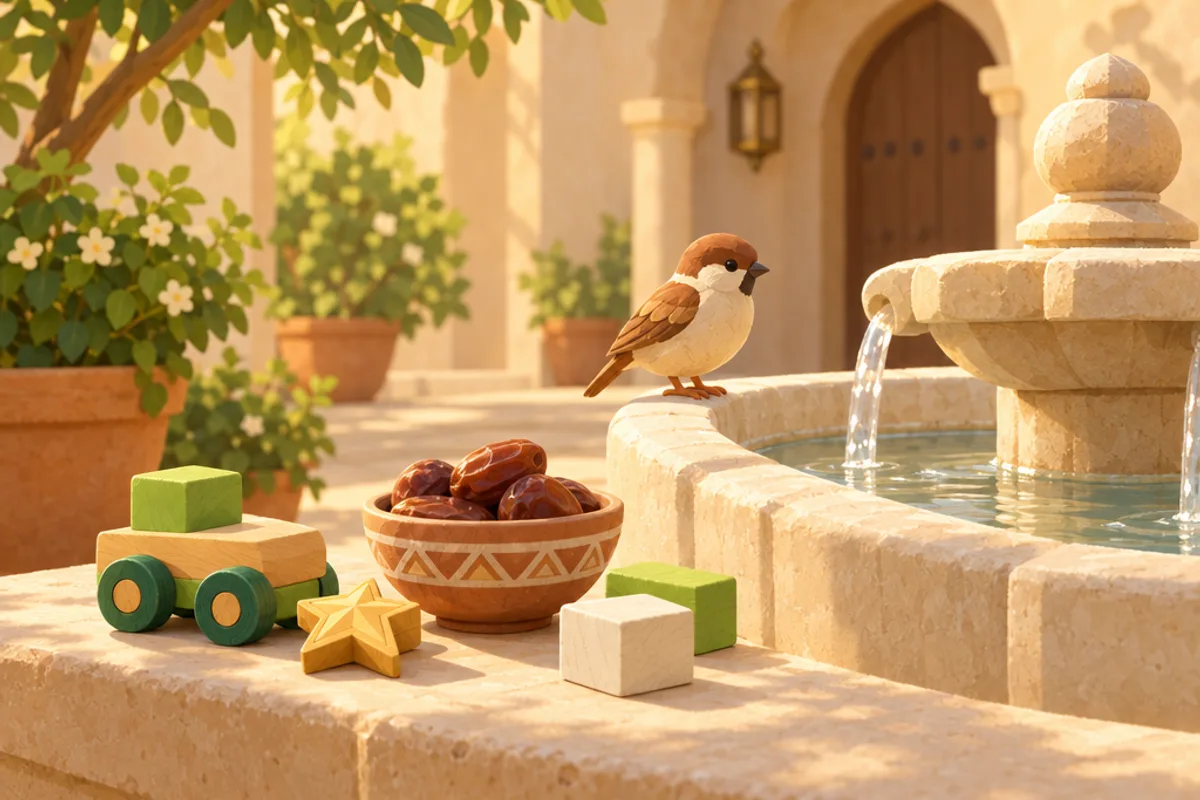
Anas ibn Malik (may Allah be pleased with him) had a little brother nicknamed Abu Umayr, who played with a small bird, a نُغَيْر (nughayr). Whenever he saw him, the Prophet ﷺ would tease him kindly: “O Abu Umayr, what has become of the little bird?” This account, reported by al-Bukhari and Muslim, is tiny and immense at once: the Messenger of Allah ﷺ knew about a child’s bird and took seriously what mattered to him.
Notice the nickname too: calling a little boy “Abu Umayr”, that is, “the father of Umayr”, is giving him a grown-up’s name, with humor and respect. The child feels grown up.
Anas himself entered the service of the Prophet ﷺ when he was only a child. He testifies, in an account reported by al-Bukhari and Muslim, that in ten years the Prophet ﷺ never said “ugh” to him, nor “why did you do that?”, nor “why didn’t you do that?”. Ten years without an irritated reproach: that is an educational program in itself.
The Prophet ﷺ also greeted the children he met. Anas, who did the same, explained that he had seen him do so (an account reported by al-Bukhari and Muslim). Saying السَّلَامُ عَلَيْكُمْ (as-salamu ‘alaykum, “peace be upon you”) to a child is telling him that he matters.
Teaching with respect
Tenderness does not prevent teaching: on the contrary, it prepares the ground. Here is how the Prophet ﷺ addressed a young boy, his cousin Abdullah ibn Abbas (may Allah be pleased with him):
حَدَّثَنَا أَحْمَدُ بْنُ مُحَمَّدِ بْنِ مُوسَى، أَخْبَرَنَا عَبْدُ اللَّهِ بْنُ الْمُبَارَكِ، أَخْبَرَنَا لَيْثُ بْنُ سَعْدٍ، وَابْنُ، لَهِيعَةَ عَنْ قَيْسِ بْنِ الْحَجَّاجِ، قَالَ وَحَدَّثَنَا عَبْدُ اللَّهِ بْنُ عَبْدِ الرَّحْمَنِ، أَخْبَرَنَا أَبُو الْوَلِيدِ، حَدَّثَنَا لَيْثُ بْنُ سَعْدٍ، حَدَّثَنِي قَيْسُ بْنُ الْحَجَّاجِ الْمَعْنَى، وَاحِدٌ، عَنْ حَنَشٍ الصَّنْعَانِيِّ، عَنِ ابْنِ عَبَّاسٍ، قَالَ كُنْتُ خَلْفَ رَسُولِ اللَّهِ صلى الله عليه وسلم يَوْمًا فَقَالَ " يَا غُلاَمُ إِنِّي أُعَلِّمُكَ كَلِمَاتٍ احْفَظِ اللَّهَ يَحْفَظْكَ احْفَظِ اللَّهَ تَجِدْهُ تُجَاهَكَ إِذَا سَأَلْتَ فَاسْأَلِ اللَّهَ وَإِذَا اسْتَعَنْتَ فَاسْتَعِنْ بِاللَّهِ وَاعْلَمْ أَنَّ الأُمَّةَ لَوِ اجْتَمَعَتْ عَلَى أَنْ يَنْفَعُوكَ بِشَيْءٍ لَمْ يَنْفَعُوكَ إِلاَّ بِشَيْءٍ قَدْ كَتَبَهُ اللَّهُ لَكَ وَلَوِ اجْتَمَعُوا عَلَى أَنْ يَضُرُّوكَ بِشَيْءٍ لَمْ يَضُرُّوكَ إِلاَّ بِشَيْءٍ قَدْ كَتَبَهُ اللَّهُ عَلَيْكَ رُفِعَتِ الأَقْلاَمُ وَجَفَّتِ الصُّحُفُ " . قَالَ أَبُو عِيسَى هَذَا حَدِيثٌ حَسَنٌ صَحِيحٌ .
Narrated by Ibn Abbas (may Allah be pleased with him)
I was behind the Prophet ﷺ one day when he said to me: “O young boy, I will teach you a few words: be mindful of Allah and He will protect you; be mindful of Allah and you will find Him before you. If you ask, ask Allah; if you seek help, seek help from Allah. Know that if the whole community gathered to bring you some benefit, they would bring you only what Allah has already written for you; and if they gathered to harm you, they would harm you only with what Allah has already written against you. The pens have been lifted and the pages have dried.”
The method is remarkable: he announces that he is going to teach, he calls the child with affection, he chooses short, rhythmic sentences that are easy to remember, and he speaks of profound things. He does not underestimate the child.
Even for table manners, the tone stays gentle. Umar ibn Abi Salama (may Allah be pleased with him), who was growing up in the Prophet’s ﷺ household, tells how his hand went all around the dish. The Prophet ﷺ said to him: “O boy, say bismillah, eat with your right hand and eat from what is in front of you.” This account is reported by al-Bukhari and Muslim. No shouting, no humiliation: three clear instructions, given on the spot.
Behind this pedagogy lies a trust: according to a hadith reported by al-Bukhari and Muslim, every child is born with the فِطْرَة (fitra), a natural disposition toward good, and it is the parents who guide it. To educate is therefore first of all to protect and to nurture what is already there.
What this changes for parents today
The Prophet ﷺ made mercy toward the little ones a sign of belonging to his community:
حَدَّثَنَا أَبُو بَكْرِ بْنُ أَبِي شَيْبَةَ، وَابْنُ السَّرْحِ، قَالاَ حَدَّثَنَا سُفْيَانُ، عَنِ ابْنِ أَبِي نَجِيحٍ، عَنِ ابْنِ عَامِرٍ، عَنْ عَبْدِ اللَّهِ بْنِ عَمْرٍو، يَرْوِيهِ - قَالَ ابْنُ السَّرْحِ - عَنِ النَّبِيِّ صلى الله عليه وسلم قَالَ " مَنْ لَمْ يَرْحَمْ صَغِيرَنَا وَيَعْرِفْ حَقَّ كَبِيرِنَا فَلَيْسَ مِنَّا " .
Narrated by Abdullah ibn Amr (may Allah be pleased with him)
The Prophet ﷺ said: “He is not one of us who has no mercy for our little ones and does not recognize the right of our elders.”
A few prophetic gestures that are easy to take up at home:
- Show affection: kiss, hug, smile. A child who feels loved listens better.
- Greet and use a nice name: say as-salamu ‘alaykum when coming home, use a tender, affirming nickname.
- Take an interest in what matters to them: their game, their pet, their drawing. Ask a real question, as with the little bird.
- Correct on the spot, briefly and without humiliating: one clear instruction is worth more than a long sermon.
- Teach short words: a supplication, a verse, a sentence of wisdom, repeated often.
- Make room for children in religious life: at the mosque, during prayer at home, with patience for crying and noise.
Kindness toward one’s family is, according to the Prophet ﷺ, the true measure of a person’s worth:
حَدَّثَنَا مُحَمَّدُ بْنُ يَحْيَى، قَالَ حَدَّثَنَا مُحَمَّدُ بْنُ يُوسُفَ، قَالَ حَدَّثَنَا سُفْيَانُ، عَنْ هِشَامِ بْنِ عُرْوَةَ، عَنْ أَبِيهِ، عَنْ عَائِشَةَ، قَالَتْ قَالَ رَسُولُ اللَّهِ صلى الله عليه وسلم " خَيْرُكُمْ خَيْرُكُمْ لأَهْلِهِ وَأَنَا خَيْرُكُمْ لأَهْلِي وَإِذَا مَاتَ صَاحِبُكُمْ فَدَعُوهُ " . قَالَ أَبُو عِيسَى هَذَا حَدِيثٌ حَسَنٌ غَرِيبٌ صَحِيحٌ مِنْ حَدِيثِ الثَّوْرِيِّ مَا أَقَلَّ مَنْ رَوَاهُ عَنِ الثَّوْرِيِّ . وَرُوِيَ هَذَا عَنْ هِشَامِ بْنِ عُرْوَةَ عَنْ أَبِيهِ عَنِ النَّبِيِّ صلى الله عليه وسلم مُرْسَلٌ .
Narrated by Aisha (may Allah be pleased with her)
The Messenger of Allah ﷺ said: “The best of you is the best to his family, and I am the best of you to my family.”
No one is a perfect parent. On tired days we shout, we lose patience. What matters is to come back to this model: to apologize, to make amends, and to start again the next day with more gentleness. The article Raising Children with Kindness offers further practical ideas, and Managing Your Anger helps in difficult moments.
Telling these stories to children
Children love to learn that the Prophet ﷺ loved children. Tell them the story of Abu Umayr and his bird, that of Anas who served him for ten years, or that of little Umama carried during prayer. You will find illustrated versions in the stories for children: Abu Umayr’s little bird and Anas in the service of the Prophet ﷺ.
A tip: after the story, ask an open question. “Why do you think the Prophet ﷺ asked about the bird?” The child remembers better what he has understood by himself.
To go further
- The life of the Prophet ﷺ told simply: the sira and the profile of the Prophet Muhammad ﷺ.
- For parents: the family guide on education.
- The chapter on good manners in Riyad as-Salihin.
- To share a moment together: family games.
Questions fréquentes
Did the Prophet ﷺ kiss children?
Yes. Al-Bukhari and Muslim report that he kissed his grandson al-Hasan in front of al-Aqra‘ ibn Habis, who was surprised by it. He answered: “Whoever shows no mercy will be shown no mercy.”
How did the Prophet ﷺ educate children?
By example, tenderness and short instructions. He called the child with affection, as with Ibn Abbas (“O young boy”), and corrected without humiliating, as with Umar ibn Abi Salama at the table. Anas testifies that in ten years he never made an irritated reproach to him.
Who was Abu Umayr?
He was the little brother of Anas ibn Malik. He played with a small bird, and the Prophet ﷺ asked him affectionately: “O Abu Umayr, what has become of the little bird?”. This account is reported by al-Bukhari and Muslim.
Did children have a place in the Prophet’s ﷺ mosque?
Authentic accounts show that they were present: he prayed while carrying his granddaughter Umama and sometimes shortened the prayer on hearing a baby cry. For the practical arrangements in your mosque (age, supervision), ask the imam or those in charge.
Did the Prophet ﷺ have children?
Yes. He had three sons, al-Qasim, Abdullah and Ibrahim, all of whom died in infancy, and four daughters: Zaynab, Ruqayya, Umm Kulthum and Fatima (may Allah be pleased with them). He wept at Ibrahim’s death, showing that sadness is not contrary to faith.
Mots arabes de cet article
- Sira سيرة
- The biography of the Prophet ﷺ: his life, his deeds and his conduct, handed down by the Companions.
- Rahma رحمة
- Mercy, active tenderness toward others; one of the attributes of Allah that the believer is invited to reflect.
- Qurrat a‘yun قرة أعين
- Literally “coolness of the eyes”: what delights and soothes, a Quranic expression used for children and loved ones.
- Fitra فطرة
- The natural disposition with which every child is born, oriented toward good and toward recognizing its Creator.
- Kunya كنية
- A nickname formed with Abu (father of) or Umm (mother of), like “Abu Umayr”; given to a child, it is a mark of affection and respect.
Sources et références
Chaque référence a été contrôlée automatiquement : existence du verset ou du hadith, numérotation sunnah.com, degré d’authenticité selon les savants.
- Coran 25:74Vérifiéquran.com
- Sahîh al-Bukhârî n° 5997Sahîh (authentique) · al-Bukhârî et Muslim (muttafaq ‘alayh, Muslim n° 2318a)VérifiéVoir sur sunnah.com
- Jâmi‘ at-Tirmidhî n° 2516Sahîh (authentique) · Ahmad Muhammad ShâkirVérifiéVoir sur sunnah.com
- Sunan Abî Dâwûd n° 4943Sahîh (authentique) · al-AlbânîVérifiéVoir sur sunnah.com
- Jâmi‘ at-Tirmidhî n° 3895Sahîh (authentique) · Ahmad Muhammad ShâkirVérifiéVoir sur sunnah.com
- Sahîh al-Bukhârî n° 1385Sahîh (authentique) · al-Bukhârî et Muslim (muttafaq ‘alayh)Vérifiétout enfant naît selon la fitra, évoqué dans le texteVoir sur sunnah.com
- Riyâd as-Sâlihîn, chapitres sur la miséricorde et les bonnes manières — an-NawawîRéférence bibliographiquesunnah.com
Dans l’application
Cet article est une synthèse pédagogique : il résume des sources vérifiées et ne constitue pas une fatwa. Les détails de pratique peuvent varier selon les écoles. Pour une situation personnelle, consultez une personne qualifiée. Signaler une erreur
Articles liés
Raising children with kindness: gentle firmness and example
Tenderness, prayer from age seven, play and screens: what the Quran and the sunna teach about raising children with gentleness, clear rules and example.

Managing anger: the Prophet’s ﷺ advice and practical steps
Why anger rises, what the Prophet ﷺ advised doing in the moment, and simple steps to keep it in check at home, at work and with children.

Parents: kindness (birr al-wâlidayn) in everyday life
Elderly parents, disagreements, non-Muslim parents, after their death: what the Quran and the sunna teach about kindness to parents, with concrete actions.