Learning to pray as a beginner: the five prayers without getting discouraged
The five prayers explained to beginners: times, the movements of one unit, a gradual learning plan and what to do when you make a mistake, without guilt.
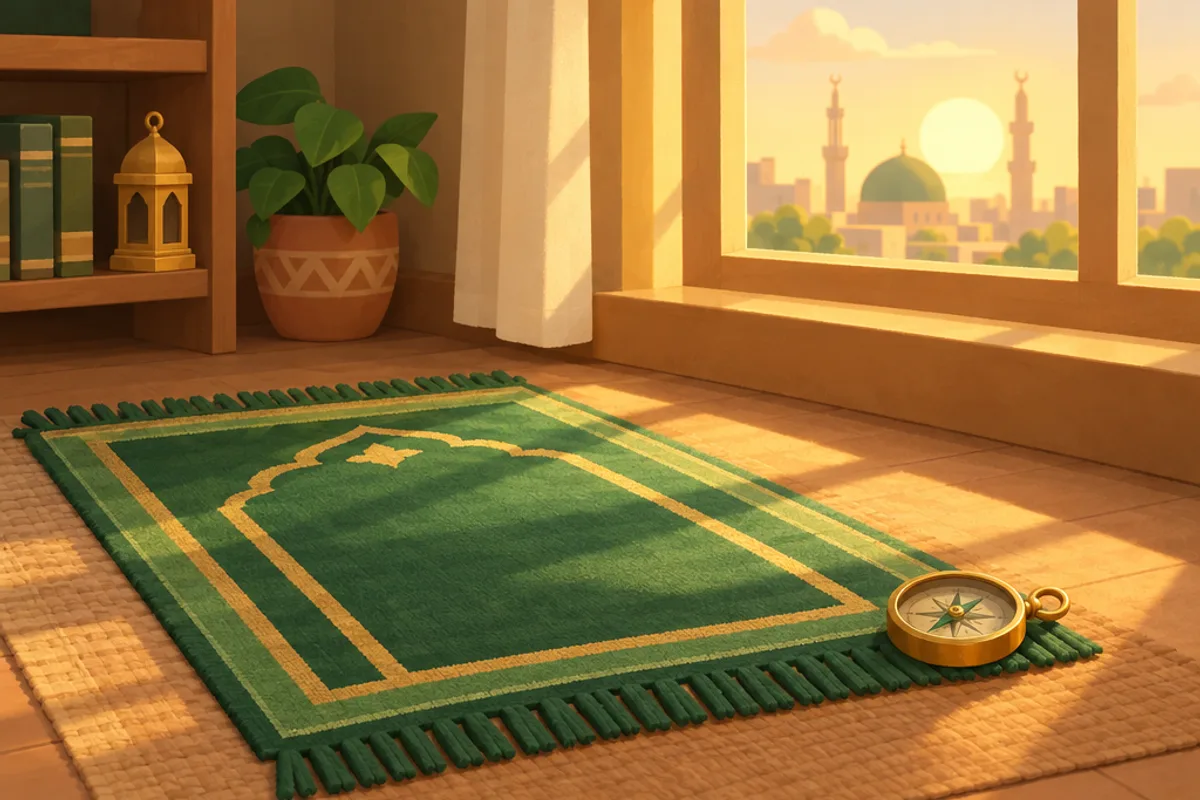
Prayer, an appointment rather than an ordeal
الصَّلاة (salah, the ritual prayer) is the second pillar of Islam, right after the declaration of faith. When you are starting out, it can seem intimidating: words in Arabic, precise movements, five times to respect. Yet its meaning is simple: to stop several times a day in order to remember Allah. The Qur’an says it in one sentence addressed to Musa (peace be upon him):
إِنَّنِىٓ أَنَا ٱللَّهُ لَآ إِلَٰهَ إِلَّآ أَنَا۠ فَٱعْبُدْنِى وَأَقِمِ ٱلصَّلَوٰةَ لِذِكْرِىٓ
Certes, c'est Moi Allah: point de divinité que Moi. Adore-Moi donc et accomplis la Salât pour te souvenir de Moi.The Prophet ﷺ compared these five appointments to a river flowing by our door:
حَدَّثَنَا إِبْرَاهِيمُ بْنُ حَمْزَةَ، قَالَ حَدَّثَنِي ابْنُ أَبِي حَازِمٍ، وَالدَّرَاوَرْدِيُّ، عَنْ يَزِيدَ، عَنْ مُحَمَّدِ بْنِ إِبْرَاهِيمَ، عَنْ أَبِي سَلَمَةَ بْنِ عَبْدِ الرَّحْمَنِ، عَنْ أَبِي هُرَيْرَةَ، أَنَّهُ سَمِعَ رَسُولَ اللَّهِ صلى الله عليه وسلم يَقُولُ " أَرَأَيْتُمْ لَوْ أَنَّ نَهَرًا بِبَابِ أَحَدِكُمْ، يَغْتَسِلُ فِيهِ كُلَّ يَوْمٍ خَمْسًا، مَا تَقُولُ ذَلِكَ يُبْقِي مِنْ دَرَنِهِ ". قَالُوا لاَ يُبْقِي مِنْ دَرَنِهِ شَيْئًا. قَالَ " فَذَلِكَ مِثْلُ الصَّلَوَاتِ الْخَمْسِ، يَمْحُو اللَّهُ بِهَا الْخَطَايَا ".
Narrated by Abu Hurayra (may Allah be pleased with him)
I heard the Messenger of Allah ﷺ say: “What would you say if there were a river at the door of one of you, and he bathed in it five times a day: would any dirt remain on him?” They replied: “No dirt would remain.” He said: “Such is the example of the five prayers: through them, Allah wipes away sins.”
The Qur’an also reminds us that prayer keeps one away from indecency and wrongdoing (Surat al-Ankabut, verse 45). It is not an exam to pass, but a habit that gradually transforms the one who practices it.
The five prayers at a glance
Each prayer is made up of units called رَكْعَة (rak‘a). Here are the five obligatory prayers:
- Fajr (dawn): 2 units, between dawn and sunrise;
- Dhuhr (noon): 4 units, shortly after the sun passes its zenith;
- Asr (afternoon): 4 units, in the middle of the afternoon;
- Maghrib (sunset): 3 units, right after the sun has set;
- Isha (night): 4 units, at nightfall.
The times change every day depending on the season and the city: the prayer times page calculates them for you, and the qibla compass shows the direction of Mecca. Before praying, you must be in a state of purity (see wudu step by step), wear clothing that covers the body and stand in a clean place.
How one unit of prayer unfolds
The Prophet ﷺ said to his Companions: “Pray as you have seen me pray” (al-Bukhari no. 631). The movements are therefore passed on first of all by example. Here is the outline:
Steps
Stand facing the qibla, with the intention in your heart of performing such-and-such a prayer.
Raise your hands and say Allahu akbar (Allah is the greatest): the prayer begins.
Recite al-Fatiha, then, in the first two units, a short surah or a few verses.
Bow, back straight, hands on the knees, and say subhana rabbiya-l-azim (glory to my Lord, the Magnificent).
Rise, saying sami‘a-llahu liman hamidah (Allah hears the one who praises Him), then rabbana wa laka-l-hamd (our Lord, to You belongs all praise).
Prostrate, with forehead, nose, hands, knees and toes on the ground, and say subhana rabbiya-l-a‘la (glory to my Lord, the Most High).
Sit for a moment, then prostrate a second time.
After the second unit and at the end of the prayer, sit to recite the tashahhud; at the end, add the prayer upon the Prophet ﷺ, then greet to the right and to the left: as-salamu alaykum wa rahmatu-llah.
What matters is not speed but calm. A man had prayed too quickly, and the Prophet ﷺ taught him the pillars:
حَدَّثَنَا مُحَمَّدُ بْنُ بَشَّارٍ، قَالَ حَدَّثَنَا يَحْيَى، عَنْ عُبَيْدِ اللَّهِ، قَالَ حَدَّثَنِي سَعِيدُ بْنُ أَبِي سَعِيدٍ، عَنْ أَبِيهِ، عَنْ أَبِي هُرَيْرَةَ، أَنَّ رَسُولَ اللَّهِ صلى الله عليه وسلم دَخَلَ الْمَسْجِدَ، فَدَخَلَ رَجُلٌ فَصَلَّى فَسَلَّمَ عَلَى النَّبِيِّ صلى الله عليه وسلم فَرَدَّ وَقَالَ " ارْجِعْ فَصَلِّ، فَإِنَّكَ لَمْ تُصَلِّ ". فَرَجَعَ يُصَلِّي كَمَا صَلَّى ثُمَّ جَاءَ فَسَلَّمَ عَلَى النَّبِيِّ صلى الله عليه وسلم فَقَالَ " ارْجِعْ فَصَلِّ فَإِنَّكَ لَمْ تُصَلِّ " ثَلاَثًا. فَقَالَ وَالَّذِي بَعَثَكَ بِالْحَقِّ مَا أُحْسِنُ غَيْرَهُ فَعَلِّمْنِي. فَقَالَ " إِذَا قُمْتَ إِلَى الصَّلاَةِ فَكَبِّرْ، ثُمَّ اقْرَأْ مَا تَيَسَّرَ مَعَكَ مِنَ الْقُرْآنِ، ثُمَّ ارْكَعْ حَتَّى تَطْمَئِنَّ رَاكِعًا، ثُمَّ ارْفَعْ حَتَّى تَعْتَدِلَ قَائِمًا، ثُمَّ اسْجُدْ حَتَّى تَطْمَئِنَّ سَاجِدًا، ثُمَّ ارْفَعْ حَتَّى تَطْمَئِنَّ جَالِسًا، وَافْعَلْ ذَلِكَ فِي صَلاَتِكَ كُلِّهَا ".
Narrated by Abu Hurayra (may Allah be pleased with him)
A man entered the mosque, prayed, then came to greet the Prophet ﷺ, who returned his greeting and said: “Go back and pray, for you have not prayed.” This happened three times. The man said: “By the One who sent you with the truth, I do not know how to do better: teach me.” He said: “When you stand up for prayer, say Allahu akbar, then recite what is easy for you from the Qur’an. Then bow until you are at ease in the bowing, rise until you are standing straight, prostrate until you are at ease in the prostration, then rise until you are at ease sitting. And do that throughout your whole prayer.”
Starting small: a gradual plan
The five prayers are obligatory from the moment one becomes a Muslim, but nobody asks you to know everything on the first day. The Qur’an says so:
لَا يُكَلِّفُ ٱللَّهُ نَفْسًا إِلَّا وُسْعَهَا ۚ لَهَا مَا كَسَبَتْ وَعَلَيْهَا مَا ٱكْتَسَبَتْ ۗ رَبَّنَا لَا تُؤَاخِذْنَآ إِن نَّسِينَآ أَوْ أَخْطَأْنَا ۚ رَبَّنَا وَلَا تَحْمِلْ عَلَيْنَآ إِصْرًۭا كَمَا حَمَلْتَهُۥ عَلَى ٱلَّذِينَ مِن قَبْلِنَا ۚ رَبَّنَا وَلَا تُحَمِّلْنَا مَا لَا طَاقَةَ لَنَا بِهِۦ ۖ وَٱعْفُ عَنَّا وَٱغْفِرْ لَنَا وَٱرْحَمْنَآ ۚ أَنتَ مَوْلَىٰنَا فَٱنصُرْنَا عَلَى ٱلْقَوْمِ ٱلْكَٰفِرِينَ
Allah n'impose à aucune âme une charge supérieure à sa capacité. Elle sera récompensée du bien qu'elle aura fait, punie du mal qu'elle aura fait. Seigneur, ne nous châtie pas s'il nous arrive d'oublier ou de commettre une erreur. Seigneur! Ne nous charge pas d'un fardeau lourd comme Tu as chargé ceux qui vécurent avant nous. Seigneur! Ne nous impose pas ce que nous ne pouvons supporter, efface nos fautes, pardonne-nous et fais nous miséricorde. Tu es Notre Maître, accorde-nous donc la victoire sur les peuples infidèles.And the Prophet ﷺ said: “Religion is ease; no one is excessive in religion without it overcoming him in the end” (al-Bukhari no. 39). Here is a realistic progression:
- Week 1: learn the movements of one unit and al-Fatiha, listening to its recitation verse by verse.
- Week 2: learn the phrases for bowing, rising and prostrating, then a very short surah such as al-Ikhlas.
- Weeks 3 and 4: learn the tashahhud and the prayer upon the Prophet ﷺ, with the supplications of the prayer.
- Afterwards: add one short surah a week and, later, the voluntary prayers.
Until you know al-Fatiha by heart, scholars indicate that the beginner recites what he knows and says simple phrases of remembrance, while continuing to learn. A small, steady step is better than a great burst of energy that runs out:
حَدَّثَنَا عَبْدُ الْعَزِيزِ بْنُ عَبْدِ اللَّهِ، حَدَّثَنَا سُلَيْمَانُ، عَنْ مُوسَى بْنِ عُقْبَةَ، عَنْ أَبِي سَلَمَةَ بْنِ عَبْدِ الرَّحْمَنِ، عَنْ عَائِشَةَ، أَنَّ رَسُولَ اللَّهِ صلى الله عليه وسلم قَالَ " سَدِّدُوا وَقَارِبُوا، وَاعْلَمُوا أَنْ لَنْ يُدْخِلَ أَحَدَكُمْ عَمَلُهُ الْجَنَّةَ، وَأَنَّ أَحَبَّ الأَعْمَالِ أَدْوَمُهَا إِلَى اللَّهِ، وَإِنْ قَلَّ "
Narrated by Aisha (may Allah be pleased with her)
The Messenger of Allah ﷺ said: “Aim for what is right and come close to it. Know that it is not his deeds that will bring any of you into Paradise, and that the deed most beloved to Allah is the most regular one, even if it is small.”
When you make a mistake or miss a prayer
Every beginner forgets a prostration, loses count of the units or stumbles over an Arabic word. This is not a failure. The Prophet ﷺ himself, out of forgetfulness, performed extra prostrations called sujud as-sahw (prostrations of forgetfulness), reported by al-Bukhari and Muslim. And the effort of the one who struggles is rewarded:
حَدَّثَنَا آدَمُ، حَدَّثَنَا شُعْبَةُ، حَدَّثَنَا قَتَادَةُ، قَالَ سَمِعْتُ زُرَارَةَ بْنَ أَوْفَى، يُحَدِّثُ عَنْ سَعْدِ بْنِ هِشَامٍ، عَنْ عَائِشَةَ، عَنِ النَّبِيِّ صلى الله عليه وسلم قَالَ " مَثَلُ الَّذِي يَقْرَأُ الْقُرْآنَ وَهْوَ حَافِظٌ لَهُ مَعَ السَّفَرَةِ الْكِرَامِ الْبَرَرَةِ، وَمَثَلُ الَّذِي يَقْرَأُ الْقُرْآنَ وَهْوَ يَتَعَاهَدُهُ وَهْوَ عَلَيْهِ شَدِيدٌ، فَلَهُ أَجْرَانِ ".
Narrated by Aisha (may Allah be pleased with her)
The Prophet ﷺ said: “The one who recites the Qur’an with mastery will be with the noble and righteous scribes. And the one who recites the Qur’an striving at it while it is difficult for him will have a double reward.”
If you have slept through a prayer or forgotten it, you pray it as soon as you remember, as the Prophet ﷺ taught (al-Bukhari and Muslim). The sick person prays according to his ability: standing, otherwise sitting, otherwise lying on his side, according to a hadith reported by al-Bukhari.
Finding concentration
Presence of heart in prayer, خُشُوع (khushu‘, humble focus), comes with time. For the Prophet ﷺ, prayer was not a chore but a rest:
حَدَّثَنِي الشَّيْخُ الإِمَامُ أَبُو عَبْدِ الرَّحْمَنِ النَّسَائِيُّ، قَالَ أَخْبَرَنَا الْحُسَيْنُ بْنُ عِيسَى الْقُومَسِيُّ، قَالَ حَدَّثَنَا عَفَّانُ بْنُ مُسْلِمٍ، قَالَ حَدَّثَنَا سَلاَّمٌ أَبُو الْمُنْذِرِ، عَنْ ثَابِتٍ، عَنْ أَنَسٍ، قَالَ قَالَ رَسُولُ اللَّهِ صلى الله عليه وسلم " حُبِّبَ إِلَىَّ مِنَ الدُّنْيَا النِّسَاءُ وَالطِّيبُ وَجُعِلَ قُرَّةُ عَيْنِي فِي الصَّلاَةِ " .
Narrated by Anas ibn Malik (may Allah be pleased with him)
The Messenger of Allah ﷺ said: “Women and perfume were made beloved to me from this world, and the coolness of my eyes was placed in prayer.”
A few simple habits help you come closer to it:
- understand the meaning of al-Fatiha, verse by verse, to know what you are saying;
- put the phone on silent and choose a quiet corner;
- take your time in prostration, the moment when you are closest to Allah;
- pray with others whenever possible: at the mosque, with family or among friends.
Prostration, in fact, raises the one who repeats it:
حَدَّثَنِي زُهَيْرُ بْنُ حَرْبٍ، حَدَّثَنَا الْوَلِيدُ بْنُ مُسْلِمٍ، قَالَ سَمِعْتُ الأَوْزَاعِيَّ، قَالَ حَدَّثَنِي الْوَلِيدُ بْنُ هِشَامٍ الْمُعَيْطِيُّ، حَدَّثَنِي مَعْدَانُ بْنُ أَبِي طَلْحَةَ الْيَعْمَرِيُّ، قَالَ لَقِيتُ ثَوْبَانَ مَوْلَى رَسُولِ اللَّهِ صلى الله عليه وسلم فَقُلْتُ أَخْبِرْنِي بِعَمَلٍ أَعْمَلُهُ يُدْخِلُنِي اللَّهُ بِهِ الْجَنَّةَ . أَوْ قَالَ قُلْتُ بِأَحَبِّ الأَعْمَالِ إِلَى اللَّهِ . فَسَكَتَ ثُمَّ سَأَلْتُهُ فَسَكَتَ ثُمَّ سَأَلْتُهُ الثَّالِثَةَ فَقَالَ سَأَلْتُ عَنْ ذَلِكَ رَسُولَ اللَّهِ صلى الله عليه وسلم فَقَالَ " عَلَيْكَ بِكَثْرَةِ السُّجُودِ لِلَّهِ فَإِنَّكَ لاَ تَسْجُدُ لِلَّهِ سَجْدَةً إِلاَّ رَفَعَكَ اللَّهُ بِهَا دَرَجَةً وَحَطَّ عَنْكَ بِهَا خَطِيئَةً " . قَالَ مَعْدَانُ ثُمَّ لَقِيتُ أَبَا الدَّرْدَاءِ فَسَأَلْتُهُ فَقَالَ لِي مِثْلَ مَا قَالَ لِي ثَوْبَانُ .
Narrated by Ma‘dan ibn Abi Talha, from Thawban (may Allah be pleased with him)
I asked the Messenger of Allah ﷺ which deed was most beloved to Allah. He replied: “Multiply your prostrations for Allah, for you do not prostrate even once for Allah without Him raising you one degree by it and wiping away one sin from you.”
To go further
- Prepare for prayer: wudu step by step.
- Learn the movements in pictures with the prayer guide.
- The supplications after the prayer in Hisn al-Muslim.
- Start with the basics through the beginner path.
Questions fréquentes
How long does it take to learn to pray?
The movements can be learned in a few days; al-Fatiha and the basic phrases often take a beginner who practices a little each day two to four weeks. The important thing is to pray from the start with what you know, then to complete it gradually.
Can I pray if I don’t know al-Fatiha by heart yet?
Yes: scholars indicate that the beginner recites what he knows and says simple phrases of remembrance while waiting to memorize al-Fatiha, which he continues to learn. Praying behind an imam is also a good way to get used to it. For a particular situation, ask a qualified person for advice.
What should I do if I missed a prayer?
If you slept through it or forgot, pray it as soon as you remember, as the Prophet ﷺ taught. For prayers neglected for a long time, scholars differ on how to make them up: a qualified person can help you organize yourself.
Can you read al-Fatiha on your phone during prayer?
The schools do not agree on reading from a text during prayer, especially in the obligatory prayers. The safest course is to memorize al-Fatiha as soon as possible, by listening to it verse by verse. For your case, ask a qualified person.
I don’t feel anything when I pray, is that serious?
No, it is common at the beginning. Humble focus (khushu‘) comes with regularity and with understanding what you recite. Continuing to pray in spite of it is already an act of faith, and the deed most beloved to Allah is the most regular one.
Must a woman pray during her period?
No. According to the agreement of scholars, a woman does not pray during her period or during postnatal bleeding after childbirth, and she does not have to make up those prayers. She resumes prayer after the major ablution (ghusl).
Mots arabes de cet article
- Salah الصلاة
- The ritual prayer, performed five times a day with precise movements and words; the second pillar of Islam.
- Rak‘a ركعة
- A unit of prayer: standing, bowing, rising and two prostrations.
- Qibla قبلة
- The direction of the Kaaba in Mecca, toward which one turns to pray.
- Takbir تكبير
- Saying “Allahu akbar” (Allah is the greatest); the first takbir opens the prayer.
- Tashahhud تشهد
- The formula recited while sitting after the second unit and at the end of the prayer.
- Khushu‘ خشوع
- Humble focus: presence of the heart and stillness of the body during prayer.
- Sujud as-sahw سجود السهو
- The two prostrations of forgetfulness, performed to make up for a lapse or a mistake in the prayer.
Sources et références
Chaque référence a été contrôlée automatiquement : existence du verset ou du hadith, numérotation sunnah.com, degré d’authenticité selon les savants.
- Coran 20:14Vérifiéquran.com
- Coran 2:286Vérifiéquran.com
- Coran 29:45Vérifiéla prière préserve de la turpitude et du blâmablequran.com
- Sahîh al-Bukhârî n° 528Sahîh (authentique) · al-Bukhârî et Muslim (muttafaq ‘alayh)VérifiéVoir sur sunnah.com
- Sahîh al-Bukhârî n° 757Sahîh (authentique) · al-Bukhârî et Muslim (muttafaq ‘alayh)VérifiéVoir sur sunnah.com
- Sahîh al-Bukhârî n° 631Sahîh (authentique) · al-Bukhârî (recueil authentique par consensus)Vérifié« Priez comme vous m’avez vu prier »Voir sur sunnah.com
- Sahîh al-Bukhârî n° 39Sahîh (authentique) · al-Bukhârî (recueil authentique par consensus)Vérifiéla religion est facilitéVoir sur sunnah.com
- Sahîh al-Bukhârî n° 6464Sahîh (authentique) · al-Bukhârî (recueil authentique par consensus)VérifiéVoir sur sunnah.com
- Sahîh al-Bukhârî n° 4937Sahîh (authentique) · al-Bukhârî et Muslim (muttafaq ‘alayh, Muslim n° 798a)VérifiéVoir sur sunnah.com
- Sunan an-Nasâ’î n° 3939Hasan sahîh · Abû GhuddaVérifiéVoir sur sunnah.com
- Sahîh Muslim n° 488aSahîh (authentique) · Muslim (recueil authentique par consensus)VérifiéVoir sur sunnah.com
- Riyâd as-Sâlihîn, livre des mérites : chapitres sur la prière — an-NawawîRéférence bibliographiquesunnah.com
Dans l’application
Cet article est une synthèse pédagogique : il résume des sources vérifiées et ne constitue pas une fatwa. Les détails de pratique peuvent varier selon les écoles. Pour une situation personnelle, consultez une personne qualifiée. Signaler une erreur
Articles liés
Wudu (ablutions) step by step: obligations, sunnahs and common mistakes
How to perform wudu step by step: the acts required by the Qur’an, the sunnahs of the Prophet ﷺ, what breaks it and the mistakes people make most often.

Praying at Work: Organizing Your Day Without Stress or Conflict
Times, place, wudu, dialogue with the employer, combining prayers when needed: practical markers for praying at work calmly, with respect for everyone.

Tajwīd: the first rules for reciting the Quran well
Points of articulation, elongations, the rules of the noon sākinah and listening to reciters: the basics of tajwīd explained simply, with examples from the Quran.